Music lives through thought. “I call you to life.” And every time, I recall these words by Scriabin. There is so much meaning in them.
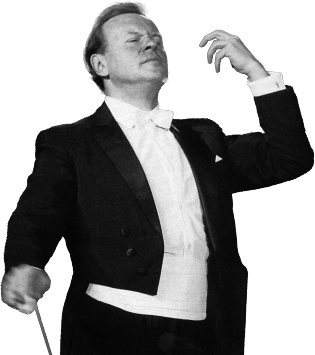
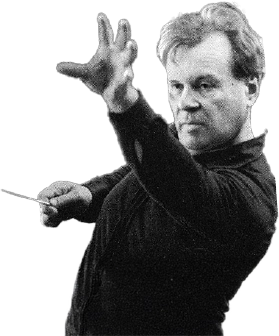
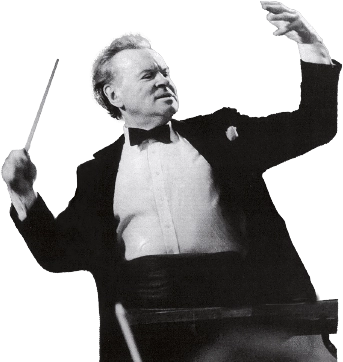
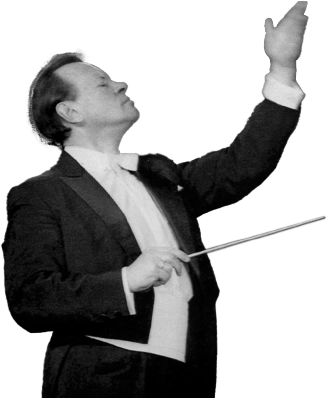
Evgeny Svetlanov
Concert “Passions” – Festival Univers Svetlanov 2018, Moscow 2018
Yana Ivanilova, soprano
Boris Berezovsky, piano
Michael Gutman, violin
Ellina Pak, viola
Alexander Rudin, cello
Grigory Krotenko, double bass
Medtner – Sonata-Reminiscenza, Op. 38; Songs
Svetlanov – Three Songs on poems by Stepan Shchipachyov
Pärt – Fratres
Schubert – Piano Quintet “The Trout” (4th movement)
This programme highlights the music of Nikolai Medtner, a composer deeply admired by Rachmaninov and championed by Svetlanov, alongside works reflecting a broad chamber music tradition.
Concert “Svetlanov the Composer” – Festival “Universe-Svetlanov!”, Moscow 2018
Dmitri Makhtin, violin
Ellina Pak, viola
Julia Siciliano, piano
Leonid Gurevich, piano
Modus Vivendi Wind Quintet:
Viktor Khotulev, flute
Anastasia Tabankova, oboe
Nikolai Ageev, clarinet
Dmitry Kuznetsov, French horn
Ilya Kashtan, bassoon
Programme:
Svetlanov – “24 Hours in the Village”, wind quintet (Morning – Noon – Evening – Midnight)
Svetlanov – Sonatina No. 1 for violin and piano
Svetlanov – Sonatina No. 2 (Sonatina-Elegy), transcribed for viola and piano
Svetlanov – Two Melodies (from Five Melodies), transcribed for viola and piano
Svetlanov – Preludes for piano (Nos. 1, 2, 11)
This programme offers an insight into Svetlanov’s chamber and piano music, revealing a personal musical language shaped by lyricism, melodic identity, and expressive clarity.
Svetlanov: Concerto for Piano and Orchestra
USSR State Symphony Orchestra
Evgeny Svetlanov, conductor
Evgeny Svetlanov began composing his Piano Concerto in 1961. After a long process of revision, the concerto ultimately took shape in a two-movement version, which the composer himself premiered fifteen years later as soloist.
Among Svetlanov’s most significant works, the concerto is deeply rooted in the Russian musical tradition, combining expressive lyricism with strong orchestral architecture. Its two movements form a coherent whole: a lyrical and reflective first movement in E major, followed by a dramatic second movement in C minor, built around a powerful dialogue between piano and orchestra.
Rachmaninov: Symphony n°3 in A minor, Op. 44
USSR State Symphony Orchestra
Evgeny Svetlanov, conductor
Written abroad, the symphony is often seen as Rachmaninov’s reflection on Russia — noble in restraint, deeply moving, and imbued with that unmistakable Rachmaninov sound.
“The Third Symphony is the most vivid and most honest embodiment in music of a struggle — a doomed struggle from the very start — against the pain and despair that come with an overwhelming longing for one’s homeland. It is the anguish of a man no longer young, who knows that he will never return home.” – J. B. Priestley, English writer and playwright
Rachmaninov: The Bells, Op. 45
USSR State Symphony Orchestra
Evgeny Svetlanov, conductor
Rachmaninov composed The Bells after receiving an anonymous letter in Rome suggesting he set Poe’s poem to music. Structured in four movements, the work traces the arc of human life — from the bright hopes of youth to death — transforming Poe’s symbolism into a deeply Russian meditation on fate and emotion.
It was the last work Evgeny Svetlanov conducted and recorded, on April 19, 2002 in London. Two weeks later, on May 3, the Maestro passed away.
Rachmaninov: Symphony n°2 in e minor, Op. 27
USSR State Symphony Orchestra
Evgeny Svetlanov, conductor
Rachmaninov’s music was central to Evgeny Svetlanov’s artistic life. As a student at the Moscow Conservatory, he included Symphony No. 2 in his graduation program.