


The festival Universe–Svetlanov! took place at the Moscow Tchaikovsky Conservatory on 10–11 November 2018 as a major tribute to Evgeny Svetlanov on the occasion of the 90th anniversary of his birth. Bringing together leading soloists, ensembles, choirs, and orchestras, it unfolded across thirteen concerts, alongside a historical exhibition, conferences, screenings of archive footage, and masterclasses — all revealing the many dimensions of Svetlanov’s artistic personality and the vast universe he created.
Designed as a musical portrait of the Maestro, the festival explored not only the major works he conducted, but also his own compositions, his affinity with piano, chamber, and vocal music, his openness to other genres such as jazz and popular music, and his commitment to championing works that are less often performed yet deeply deserving of attention.
The programme also traced Svetlanov’s travels across the world and the influence of different cultures on his artistic vision.
One of the festival’s most distinctive features was the personal connection each participating musician had with Svetlanov: friends, colleagues, admirers, laureates of various editions of the Evgeny Svetlanov International Conducting Competition, and, naturally, the Evgeny Svetlanov State Academic Symphony Orchestra of Russia, which he led for 35 years.
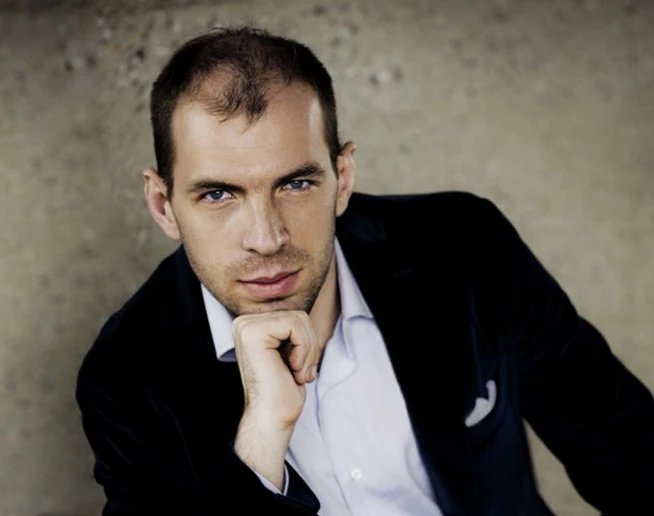
Concert No. 1
In Memory of the Great Artist
Andrei Korobeinikov, piano
P. Tchaikovsky (1840–1893)
Trio in A minor, Op. 50, “In Memory of a Great Artist”
Opening the festival, this chamber concert brought together Andrei Korobeinikov, Vadim Repin, and Alexander Kniazev in Tchaikovsky’s monumental Trio in A minor, Op. 50. Conceived as a tribute to artistic friendship and memory, the work set the emotional and symbolic foundation of the entire festival. Its depth and introspection echoed Svetlanov’s own artistic ideals.
A true artist is like a tree: the richer and more nourishing its fruits, the more widely they are shared among people. Many nations in many countries may partake of them. But one must never forget the tree on which they grew, nor the soil that fed its mighty roots.
Evgeny Svetlanov
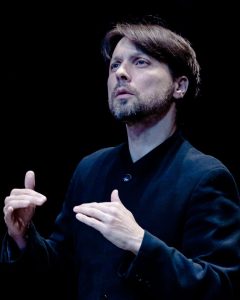
Roberto Forés Veses
Third Prize Winner of the 1st Evgeny Svetlanov International Conducting Competition 2007
Concert No.2 Beloved France
Oksana Sidyagina, harp
Chamber Orchestra of the Moscow State Conservatory
Roberto Forés Veses, conductorSvetlanov (1928–2002) — Russian Variations for harp and string orchestra
J. Turina (1882–1949) — The Bullfighter’s Prayer
G. Bizet (1838–1875) — Symphony in C major
This programme reflected Svetlanov’s profound artistic connection with France. Featuring works by Bizet, Turina, and Svetlanov himself, the concert combined elegance, colour, and orchestral brilliance. Under Roberto Forés Veses, the Chamber Orchestra of the Moscow Conservatory offered a refined homage to a country that played a central role in the Maestro’s career.
When Albert Sarfati invited Evgeny Fyodorovich to join his agency and we came under the management of Marina Bower, France began to shine for us in all the colours of the rainbow. Paris is wonderful when you have friends ready to run around with you, to show you things, to tell you stories, and to fill you with everything of interest that the history, literature, and music of this country have to offer. It was also in France that Svetlanov conducted his final opera production — “Madama Butterfly”. He had long dreamed of this staging. He felt that he would soon have to complete his life’s path with an essential creative musical ‘arch,’ to which he had always inwardly aspired. He accepted René Koering’s invitation to stage Puccini’s opera in Montpellier, in its historic, renowned, and prestigious theatre.
Excerpt from Nina Svetlanova’s novel “Unexpected Svetlanov”
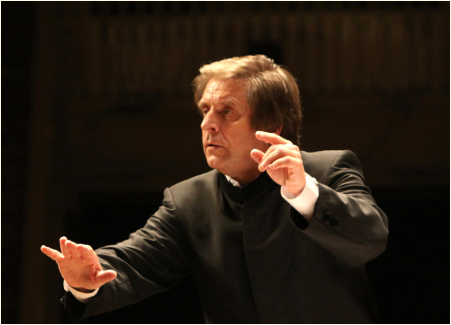
Concert No. 3 Remembrance
Yurlov State Russian Choir
Gennady Dmitryak, conductorE. Svetlanov (1928–2002) — Remembrance, postlude for a cappella choir, in memory of Alexander Yurlov
G. Sviridov (1915–1998) — Three Choruses from the music to A. K. Tolstoy’s tragedy Tsar Fyodor Ioannovich; Five Choruses on Poems by Russian Poets — A Pushkin Garland
Once, it was already past midnight when I finished a new work — “Remembrance” (a postlude for a cappella choir), dedicated to the blessed memory of Alexander Alexandrovich Yurlov. As was my habit, when I wrote the completion date on the last page, I suddenly shuddered involuntarily… It turned out that I had composed this piece at exactly the very hours when, two years earlier, the man to whom it is dedicated had passed away. Such a coincidence deeply moved me. There are indeed inexplicable things in life… I called this postlude for unaccompanied choir “Remembrance”, but more precisely it should have been called “Commemoration”. This work is almost without words; only in the middle is there a single phrase…
Excerpt from Evgeny Svetlanov “Music Today”
Concert No.4
America’s Light Breath
Andrei Korobeinikov, piano
Andrea Fallicо, clarinet
Christie Julien, pianoS. Rachmaninov (1873–1943) – Suite No. 1 for Two Pianos (Fantaisie-tableaux), Op. 5
G. Gershwin (1898–1937) – Three Preludes for piano
D. Novacek – Rag 2 from 4th Street Drag,
A. Beach (1867–1944) – Lullaby
E. Svetlanov (1928–2002) – Prelude and Scherzo for clarinet and piano
L. Bernstein (1918–1990) – Maria Suite from the musical “West Side Story”, transcription for piano and clarinet by R. Stoltzman
A. Templeton (1910–1963) – Pocket Sonata
B. Kovács (born 1937) – After You, Mr. Gershwin
These tours were important for Svetlanov for another reason as well: after a long interval, the USSR State Symphony Orchestra performed once again on New York’s most prestigious stage, Carnegie Hall. Evgeny Fyodorovich always recalled with pride, and emphasized in all his interviews, that our country’s State Orchestra held a unique and singular record — thirteen concert evenings on that celebrated stage during the 1970s. At that time, the tour for the Soviet artists was organized by the famous Sol Hurok. Among the stars who graced those evenings were such names and soloists as David Oistrakh, Sviatoslav Richter, Mstislav Rostropovich, and the leading singers of the Bolshoi Theatre. To this day, no other ensemble has surpassed that record. Evgeny Fyodorovich was always sincerely proud of this and often recalled the occasion in every conversation concerning America. Once he said to me: “Alas, human nature is such that after only a few days people no longer wish not only to know anything, but even to remember. One must speak persistently about important things; then perhaps at least something will remain in memory.”
Excerpt from Nina Svetlanova “Unexpected Svetlanov”
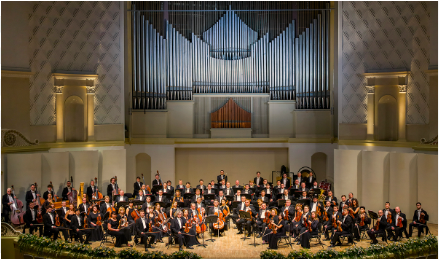
Concert No. 5 A Dedication
Dmitri Makhtin, violin
Alexander Kniazev, cello
Evgeny Svetlanov Symphony Orchestra of Russia
Lio Kuokman, conductor, Second Prize Winner of the 3rd Evgeny Svetlanov International Conducting Competition 2014E. Svetlanov (1928–2002) – Poem for Violin and Orchestra In Memory of David Oistrakh
E. Bloch (1880–1959) – Schelomo, Hebraic Rhapsody for Cello and Orchestra
M. Bruch (1838–1920) – Kol Nidrei, for cello and orchestra
I. Stravinsky (1882–1971) – Suite from the ballet “Petrushka”
My “Poem for Violin and Orchestra” was dedicated to the memory of Oistrakh. I loved David Fyodorovich deeply — his art, and I had the good fortune to collaborate with him, to work and perform with him; I loved him as a human being. He was one of those crystal-pure people in his attitude toward music, toward his colleagues, and toward those around him. His death profoundly shook me and gave rise to the work that bears the title “Poem to the Blessed Memory of David Oistrakh for violin and orchestra”. I emphasize the word ‘and’ deliberately, because this is, as it were, a dialogue between the violin and the orchestra: here both the orchestra and the violin stand as equals, each speaking in turn. There is an enormous solo cadenza for violin alone, embodying, as it were, the living David Fyodorovich with his violin in his hands, working wonders.
Excerpt from Evgeny Svetlanov “Turning the Pages of Life”
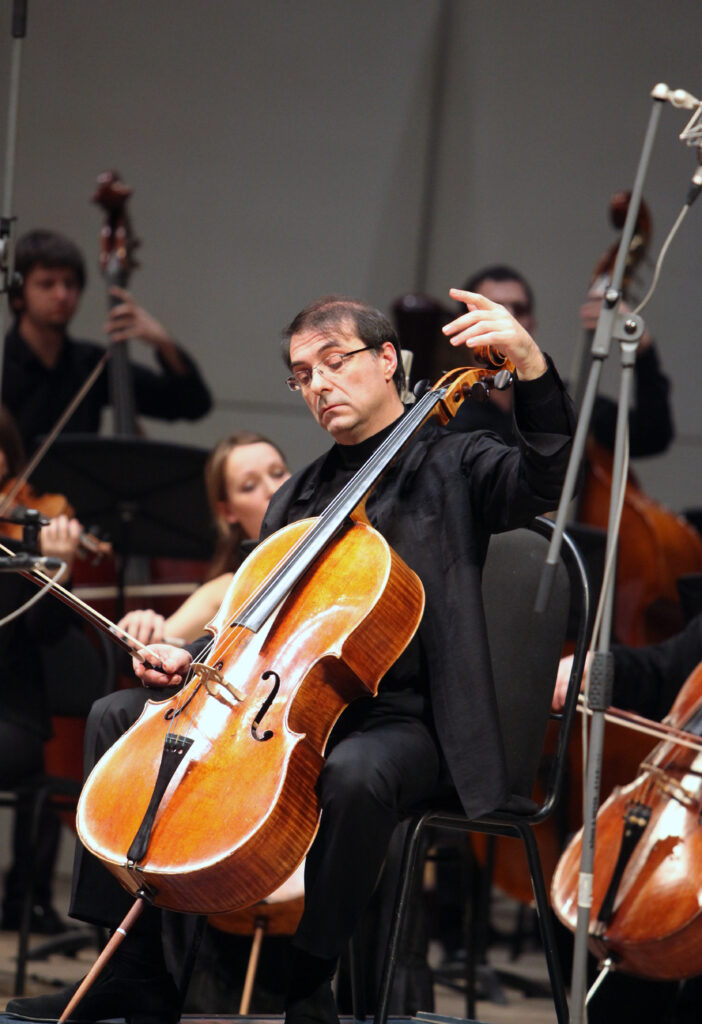
Concert No. 6 Passions
Yana Ivanilova, soprano
Boris Berezovsky, piano
Michael Gutman, violin
Ellina Pak, viola
Alexander Rudin, cello
Grigory Krotenko, double bassN. Medtner (1880–1951) – Sonata-Reminiscenza, Op. 38
N. Medtner – Songs
E. Svetlanov (1928–2002) – Three Songs on poems by Stepan Shchipachyov
A. Pärt (born 1935) – Fratres
F. Schubert (1797–1828) – Fourth movement from the Piano Quintet “The Trout”
“…The works of this truly great composer,” and “Russia is already beginning to understand that he has taken his place among our ‘immortals.’” These words were told by Rachmaninov about Nikolai Medtner, whose musical work Sergei Vasilyevich held in the highest esteem.
Medtner was uncompromising in his struggle for lofty and humane art, and he showed no mercy toward anyone who encroached upon it.
I would like to express one wish addressed to our performing musicians, who, it seems to me, remain greatly indebted to Medtner’s music. It is necessary to overcome the inertia that inevitably takes shape in concert practice. For we remember well the warm and enthusiastic reception that Medtner’s compositions received from the public when they were regularly included in the programmes of the greatest Soviet performers — G. Neuhaus, S. Feinberg, A. Goldenweiser, V. Sofronitsky, E. Gilels, Ya. Zak, D. Oistrakh, Z. Dolukhanova, N. Kazantseva, A. Pirogov, I. Kozlovsky, and many others.
Evgeny Svetlanov
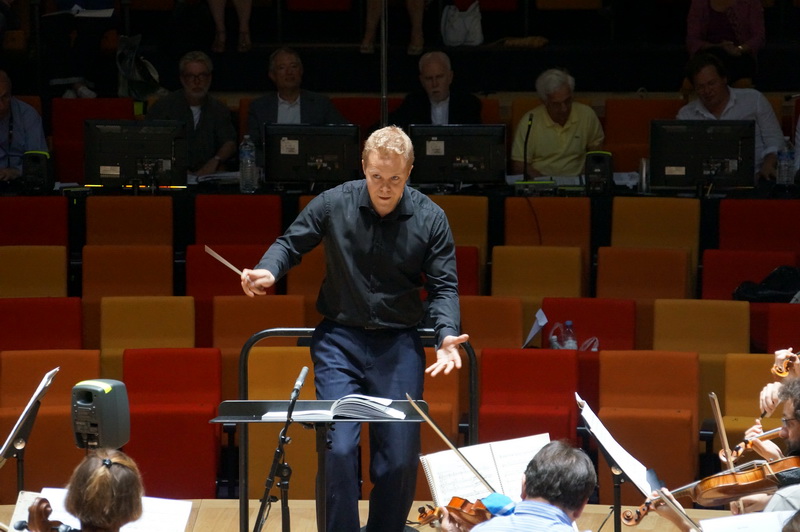
Kalle Kuusava
Laureate of the 3th Evgeny Svetlanov International Conducting Competition 2014
Concert No. 7
Circles of Memory
Dmitri Makhtin, violin
Alexander Rudin, cello
Ural Youth Symphony Orchestra
Kalle Kuusava, conductorE. Elgar (1857–1934) –
Prelude from the oratorio “The Dream of Gerontius”
R. Koering (born 1940) –
“Rings of Memory” for violin, cello, and symphony orchestra (world premiere, dedicated to Evgeny Svetlanov)
P. I. Tchaikovsky (1840–1893) –
Symphonic poem “Francesca da Rimini”
Evgeny Fyodorovich first heard Edward Elgar’s oratorio “The Dream of Gerontius” during his trip to London in 1960, when it was conducted by Sir Malcolm Sargent. The work made such a profound impression on the Maestro that he resolved to introduce it to Soviet audiences. Its Moscow premiere took place in 1983, performed by the USSR State Academic Symphony Orchestra, three British soloists (Arthur Davies, Felicity Palmer, and Norman Bailey), and the London Symphony Chorus, who travelled to Moscow especially for this concert. The performance was recorded on an LP by Melodiya.
After Evgeny Svetlanov’s death, I expressed my admiration for the Maestro in the form of a work for violin, cello, and orchestra, which I called “Circles of Memory”. For the 90th anniversary, I decided to add another movement to it, but as I composed, I realized that I would not be adding to those circles; instead, I would write a new work which, rather than continuing the earlier tribute, would become a portrait under the title “Rings of Memory”…
My new score is a portrait made up of many images and feelings, embracing both joy and melancholy, spontaneity and kindness — a portrait composed of great and small events alike… The violin merging with the cello, the orchestra, the duet, and then the trio of soloists… Melancholy converses with grandeur, turbulence with calm and light… “Rings of Memory” is his friends who loved him; it is he himself, the one we would wish to resemble. Thus the rings of my memory speak of this great man and artist.
René Koering, composer
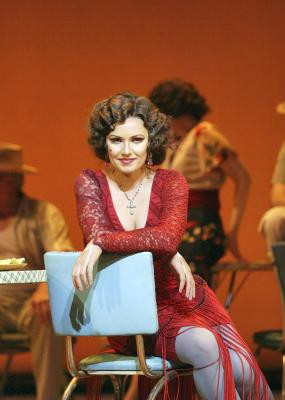
Concert No. 8
Songs and Dances of Death
Andrei Korobeinikov, piano
Alexander Kniazev, cello
Marina Domashenko, mezzo-sopranoS. Rachmaninoff (1873–1943) –
Sonata for Cello and Piano in G minor, Op. 19
M. Mussorgsky (1839–1881) –
Song cycle “Songs and Dances of Death”
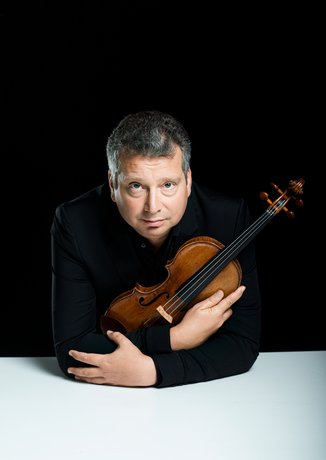
We worked with the Maestro on Liszt’s oratorio “Christus”. By then he was already unwell. And it was as though he savoured and delighted in those rehearsals, in that music. We were in no hurry; we worked for hours. He said to me: it would be wonderful to record Mussorgsky’s “Songs and Dances of Death afterwards.” He did not have time… And for me it is a great honour that I am at least able, in this way, to fulfil the Maestro’s plans.
Marina Domashenko, singer
Concert No. 9
Svetlanov the Composer
Dmitri Makhtin, violin
Ellina Pak, viola
Julia Siciliano, piano
Leonid Gurevich, piano
Modus Vivendi Wind Quintet, comprising:
Viktor Khotulev, flute
Anastasia Tabankova, oboe
Nikolai Ageev, clarinet
Dmitry Kuznetsov, French horn
Ilya Kashtan, bassoonE. Svetlanov (1928–2002)
– “24 hours in the Village”, quintet for flute, oboe, clarinet, bassoon, and horn: Morning, Noon, Evening, Midnight
– Sonatina No. 1 for violin and piano
– Sonatina No. 2 (Sonatina-Elegy) for violin and piano, arranged for viola and piano
– Two Melodies from the cycle “Five Melodies for Violin and Piano”, Russian and Jewish), transcribed for viola and piano
– Preludes for piano Nos. 1, 2, and 11
A composer’s style, his musical language, is expressed above all through his own intonation. In the end, we recognize a composer’s music by his melodic thinking — precisely by that musical speech which belongs to this composer and to no other.”
“What matters is that today we should hear his music as a composer, his recordings as a conductor, and his playing as a pianist. He was great in everything he did. Not was — is!
Alexandra Pakhmutova, composer
Concert No. 10 The Promise
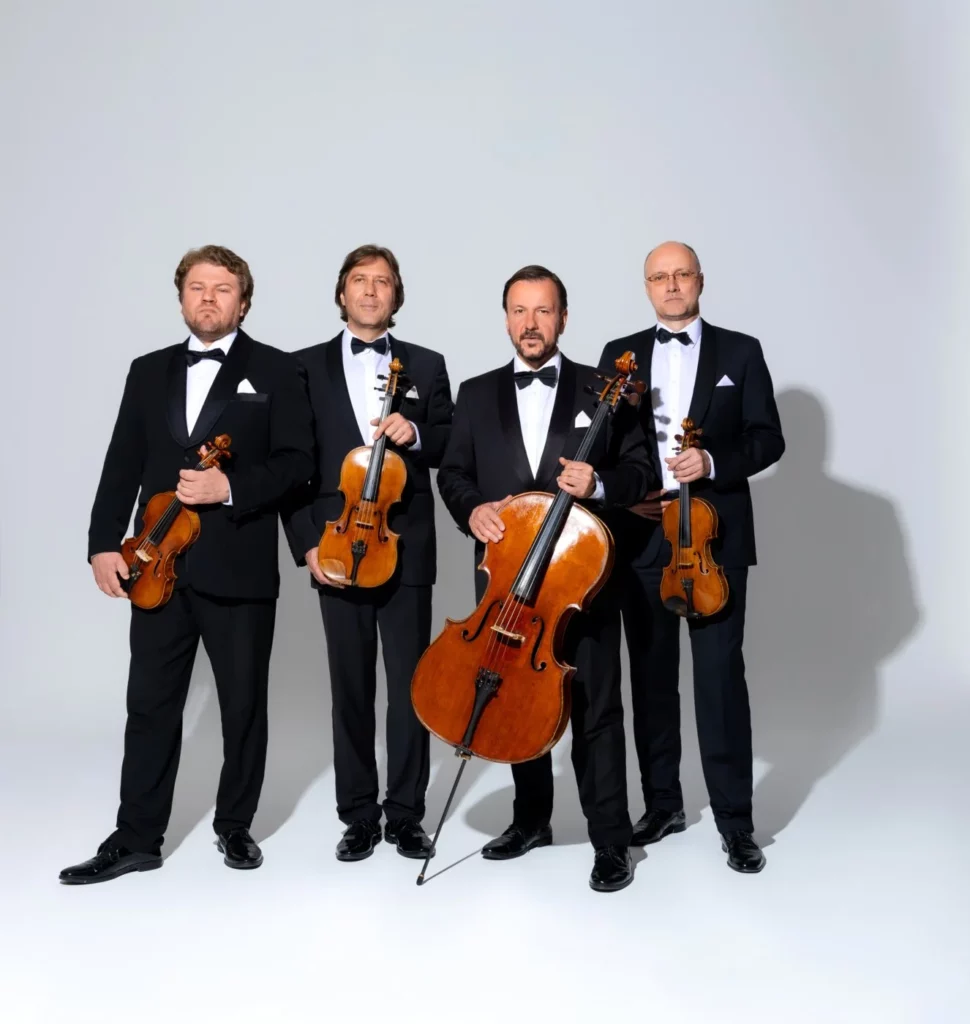
Borodin Quartet
Ruben Aharonian, violin
Sergei Lomovsky, violin
Igor Naidin, viola
Vladimir Balshin, celloBorodin – String Quartet No. 2 in D major
Myaskovsky – String Quartet No. 3 in A minor, Op. 86
E. Svetlanov – Waltz from the String Quartet
We often encounter the fact that many performers tend, as it were, to pass Myaskovsky’s work by. At times they are afraid to include one or another of his compositions in their programmes, as it seems to me, primarily for one reason alone: Will I have the same success performing Myaskovsky as I would with works by Prokofiev or Shostakovich? — for the very same reasons of performative inertia of which I have just spoken. But this was by no means always the case. Earlier, throughout the first half of the twentieth century, Myaskovsky’s works were performed constantly and always attracted great attention from both musicians and listeners.
I am among those who regularly include Myaskovsky’s compositions in my programmes. The noble, profound, heartfelt, truly Russian music of Myaskovsky cannot fail to find a direct path to the hearts and minds of the contemporary listener.
Evgeny Svetlanov
Concert No. 11
The Voice of Fate
Vadim Repin, violin
Bogdan Volkov, tenor
Ekaterina Morozova, soprano
Pyotr Migunov, bassEvgeny Svetlanov State Academic Symphony Orchestra of Russia
Yurlov Russian State Academic Choir
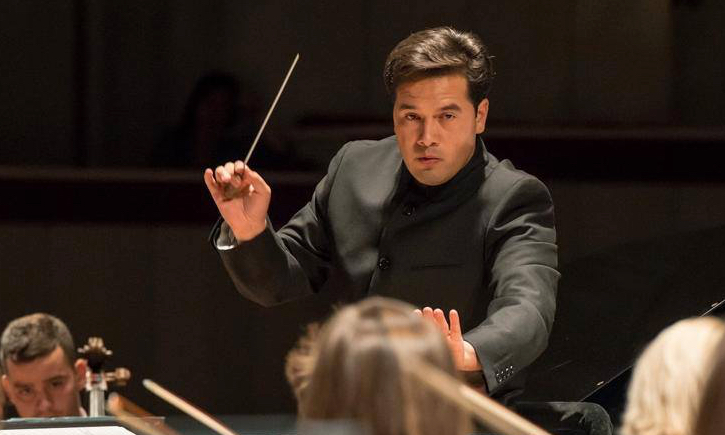
Robert Treviño, conductorE. Svetlanov – “Dawn in the Fields”, symphonic picture
Prokofiev – Violin Concerto No. 2 in G minor, Op. 63
Rachmaninov – “The Bells”, symphonic poem for soloists, chorus and orchestra, Op. 35
“The Bells”. It was this very work that was performed at his last concert. It is an extraordinarily pure, piercing, and deeply human composition. Evgeny Fyodorovich loved this work, and after those performances he would emerge as though ‘cleansed of all impurity,’ somehow calmer and quieter. He said to me: ‘Look how simple and natural it all is. There are only three soloists, yet in each entry, in each solo, in both the text and the music, there is an entire fragment of human life. The tenor is the beginning of all that is joyful: the surge of Youth, the striving for happiness, the hope of a beautiful Future. The soprano is marvellous Maturity, love, the intoxication of life, seemingly without end. And the baritone, as though summing it all up, speaks tragically of the Eternal Rest awaiting everyone who once came into this world.’ In Svetlanov’s interpretation, this work laid bare the soul, shook one to the core, and carried one to ecstasy.
Excerpt from Nina Svetlanova “Unexpected Svetlanov”
Concert No. 12 The Man-Universe
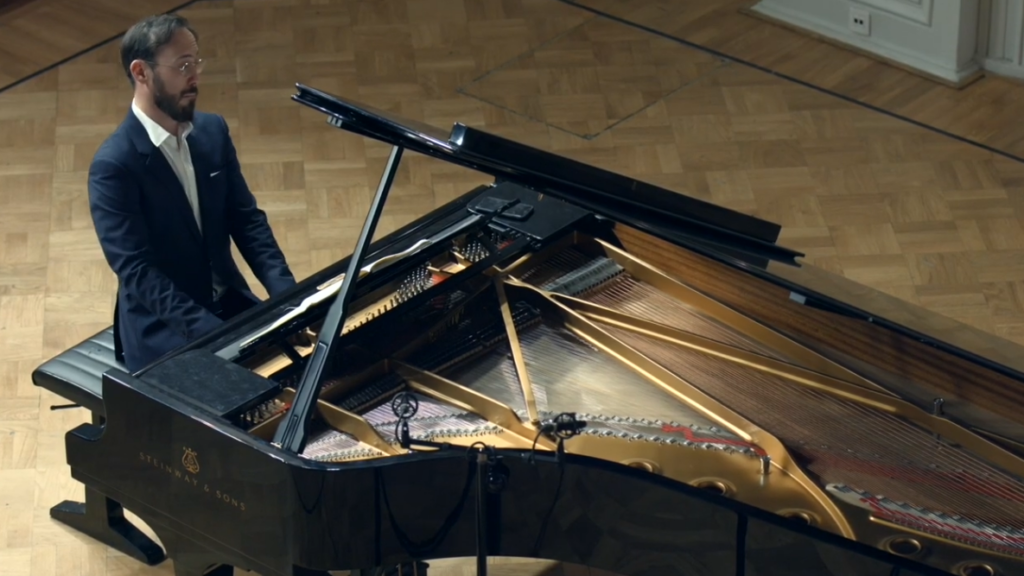
Yaron Herman, piano
Jazz improvisations tribute to Evgeny Svetlanov
It has long been well known that in the most varied genres one may find works that are talented and others that are worthless. And of course, I would prefer a short but vivid, gifted, tastefully written piece to a tedious, laboured symphony. It may be a song, a jazz piece, or an ensemble work. And I will say frankly: I love jazz and popular music…
“Unpublished Confession” by E. Svetlanov, written for the newspaper “Vechernyaya Moskva”
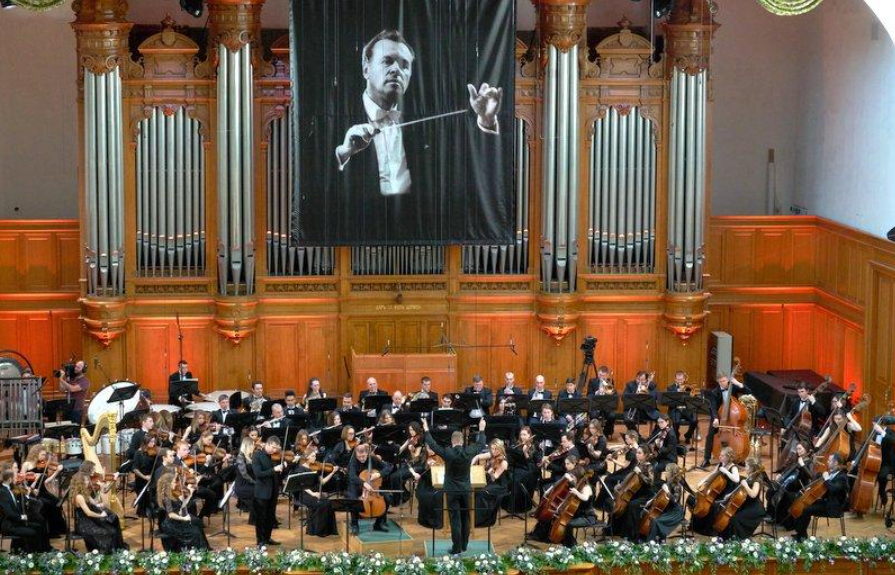
Concert No. 13
Festival Closing Concert
Part I – The Meeting That Never Took Place
Boris Berezovsky, piano
Evgeny Svetlanov State Academic Symphony Orchestra of RussiaP. I. Tchaikovsky (1840–1893) – Piano Concerto No. 1 in B-flat minor, Op. 23
Part II – Dedicated to the Planet Svetlanov
Boris Berezovsky, piano
Dmitri Makhtin, violin
Alexander Knyazev, celloS. Rachmaninov (1873–1943) – Trio élégiaque No. 2 in D minor, Op. 9
Boris Berezovsky and the Maestro Svetlanov were never able to meet on stage: their concert had been scheduled for 5 May 2003, but Svetlanov passed away on 3 May. Tchaikovsky’s First Piano Concerto had been planned for that programme, and for this reason the work was performed at the festival’s closing concert.
Is sound material? Can one put it in one’s pocket or eat it? Of course it is material! It lives in every vein of a living organism. But it remains motionless if one is asleep and wishes to hear nothing.
Svetlanov is a force that strikes every nerve ending of all living things so powerfully that the buried reserves of beauty in a person cannot but awaken. And then one begins to hear, to respond, to converse with what one has heard, with music that not only bathes the soul, but pierces through it, lifting you toward the unknown, toward heaven, toward God!
Valentin Gaft, actor and poet